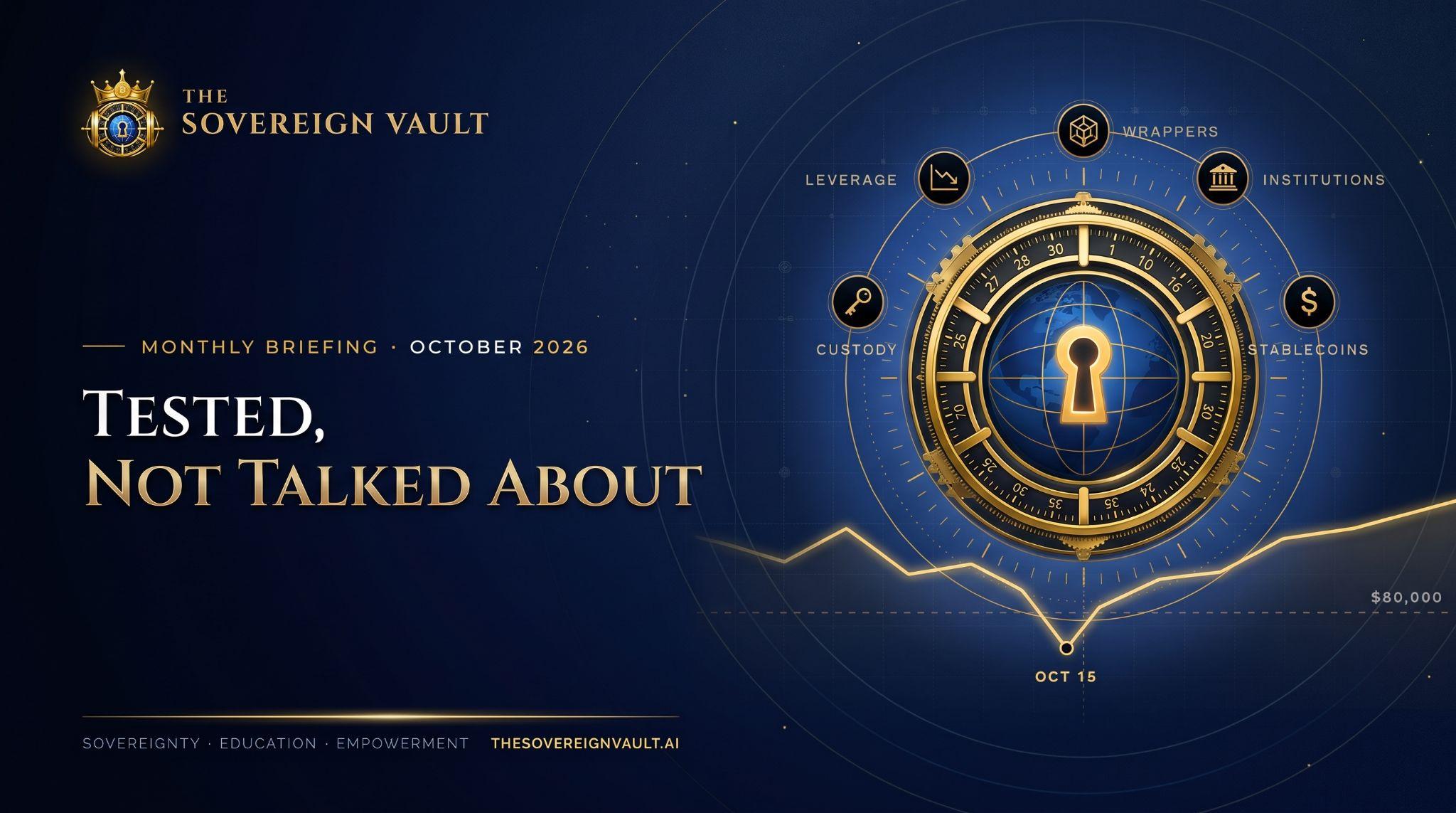
Between the two of us, we have now watched enough of these months to recognise the shape of one early. October was that shape. Inflation ran hotter than the market wanted, close to a billion dollars in leveraged bets were gone inside a single stretch, and more than eighty million dollars quietly left hardware wallets whose owners had every reason to think they were safe. If you spent the month with your eyes on the chart and your stomach following it down, you were in good and plentiful company.
We want to be honest with you about what we felt watching it, which was mostly calm, and we think it is worth explaining why. Nothing that happened in October asked us to change a single thing we teach. The members who came through it steady were not the ones who called the bottom or caught the bounce. They were the people who had already protected their capital, already held their keys the way we show you, and already settled on how much they were willing to lose long before the market handed them a reason to be afraid. That steadiness is what Sovereignty, Education and Empowerment look like when they are tested rather than talked about. So here is our read on the month, and what we would want you to take from each piece of it.
1. The Ledger Drain Was a Lesson in Habits, Not Hardware
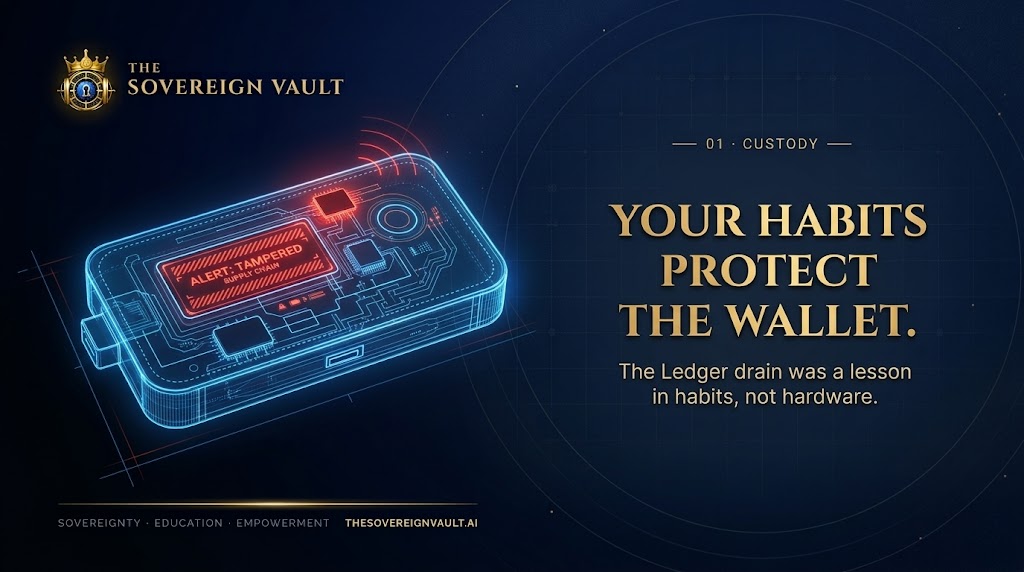
This one sat closest to home for us, because custody is the heart of what Dee teaches. On 9 October, hundreds of Ledger wallets were drained of what security researchers put at close to ninety million dollars, and the detail that mattered was where those devices had come from. Every confirmed case traced back to CryptoBilis, an authorised Ledger reseller in Southeast Asia, which tells us the weakness was introduced along the supply chain, inside devices tampered with before they ever reached their owners, rather than in Ledger’s own technology. Ledger has opened an investigation and asked the reseller to halt all sales and shipments.
We understand the instinct to see a story like this and decide hardware wallets are the problem, but please resist it, because the real lesson is a quieter one. Owning your keys is a discipline you keep up, not a gadget you purchase and forget. Buy your devices straight from the maker, check the software every single time, never let your seed phrase touch a connected machine, and actually read a transaction before you sign it. The wallet will protect you, but only as far as your habits protect the wallet. That is the whole of The Sovereign Operator in a sentence, and a month like this is why we keep repeating it.
2. Bitcoin Dipped Below Eighty Thousand, and the Thesis Held
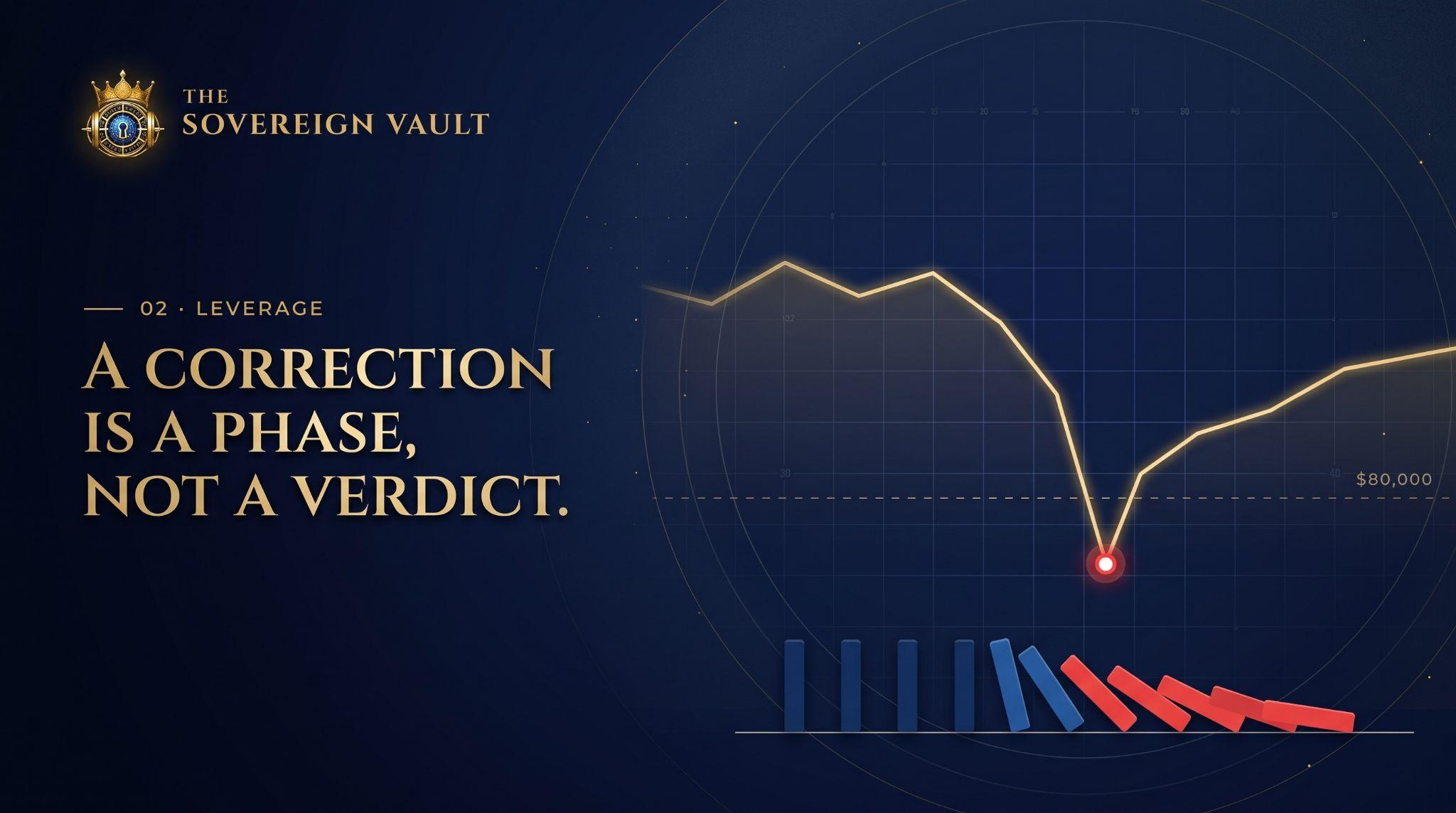
Here is the sequence, because the order of events is the lesson. September inflation came in at 3.7 percent when the market had settled on 3.6, and that small miss was enough to push Bitcoin under $80,000 on 15 October. Nearly a billion dollars of futures positions were liquidated on the way down, and traders briefly put close to even odds on another rate rise at the October meeting. Within hours, Bitcoin was back above the line it had fallen through.
Notice what actually did the damage. One inflation figure does not dismantle the long-term reasons to own Bitcoin; leverage is what turned a routine pullback into a stampede. The people who sat through that week unbothered had chosen their position sizes in advance and were not leaning on anyone else’s conviction to hold their nerve. We say this in every cohort and we will say it again here: a correction is a phase you walk through, not a judgement on what you own. Read the phase you are standing in and respond to that, not to the fear in the room.
3. Know What You Own

This next one is subtle, and it is exactly the kind of thing we want you trained to spot. MSCI decided to drop companies that exist mainly to hold investments rather than to run a real business, with the list of removals due on November 11 and the effect landing after the 30 November close. The Bitcoin-treasury names, Strategy and Metaplanet among them, are directly in the firing line, because the index funds that hold their shares may be forced to sell them no matter what Bitcoin itself is doing.
We point this out because so many people believe they have bought Bitcoin when what they really hold is a company’s shares, and those are not the same thing. The share price carries its own weather: its own rules, its own board, and now its own forced sellers arriving on a date set by someone else entirely. When we talk about structure before selection, this is what we mean. Know what you own, and know everything that quietly stands underneath it.
4. The Banks Are Rebuilding What You Already Do

We will admit this one made us smile. Deutsche Bank has confirmed it will hold Bitcoin, Ether and a few stablecoins for its institutional and corporate clients in Europe, with the service due to open before the year is out, pending regulatory approval. The way they plan to do it rests on keys protected by hardware, approvals that need more than one person to sign off, and a firm line drawn between the funds kept warm for use and the funds kept in cold storage.
Read that list of safeguards again and it should sound like a page out of our own curriculum. Keys on hardware, no single person able to move funds alone, cold storage for whatever you are not actively using: these are the habits we have been teaching you to run at the kitchen table, now being rebuilt inside one of the largest banks in the world. We take no small satisfaction in it. The discipline was sound long before the institutions arrived to agree with us, and you do not need their permission to practise it today.
5. Know What Actually Stands Behind Your Stablecoin

Our last one looks like dry regulation, and we promise you it is not. The European Banking Authority has named USDC the European Union’s first significant e-money token under the MiCA rules, which brings its reserves under the EBA’s direct supervision, with the tighter requirements beginning on 12 November.
Here is why we flag it for you. Any time you leave money sitting in a stablecoin, you are trusting whatever stands behind it to hold its value, so a shift in who watches over that backing is a question worth your attention rather than noise to scroll past. This is the risk lens we teach, applied in real time: know what the token actually is, know who issues it, and know which rules now govern the reserve that supposedly makes it worth a dollar. If you cannot explain why a stablecoin holds its value, you were never really holding a safe dollar in the first place.
The Month in One Line
If there is one thing the two of us have learned across our years in this, it is that the market rarely rewards the fastest hand in the room. It rewards the decision you had already made before the moment arrived to test it. October handed out stress to everyone who was improvising and quiet to everyone who was prepared, and that preparation is the whole of what we build with you inside the Vault.
Better questions, in a quieter room.
The Sovereign Vault | Joanna Dileto & Dee Skillicorn
The future belongs to those who S.E.E.
Have questions? Email us at support@thesovereignvault.ai
Important: The Sovereign Vault provides education, security guidance and strategic support relating to digital assets and sovereign wealth structures. Information provided is general in nature and does not constitute personal financial, taxation, or legal advice.
International banking, asset protection, estate, taxation and other specialist matters should be addressed with appropriately licensed or qualified professionals and remain subject to applicable legal, regulatory, KYC/AML and jurisdictional requirements.